This page explains how The Hive Way approaches beekeeping ethically and sustainably, through small-scale, hands-on practices that prioritise the wellbeing of the bees, support local biodiversity, and encourage responsible choices from hive to jar.
Minimal use of plastic
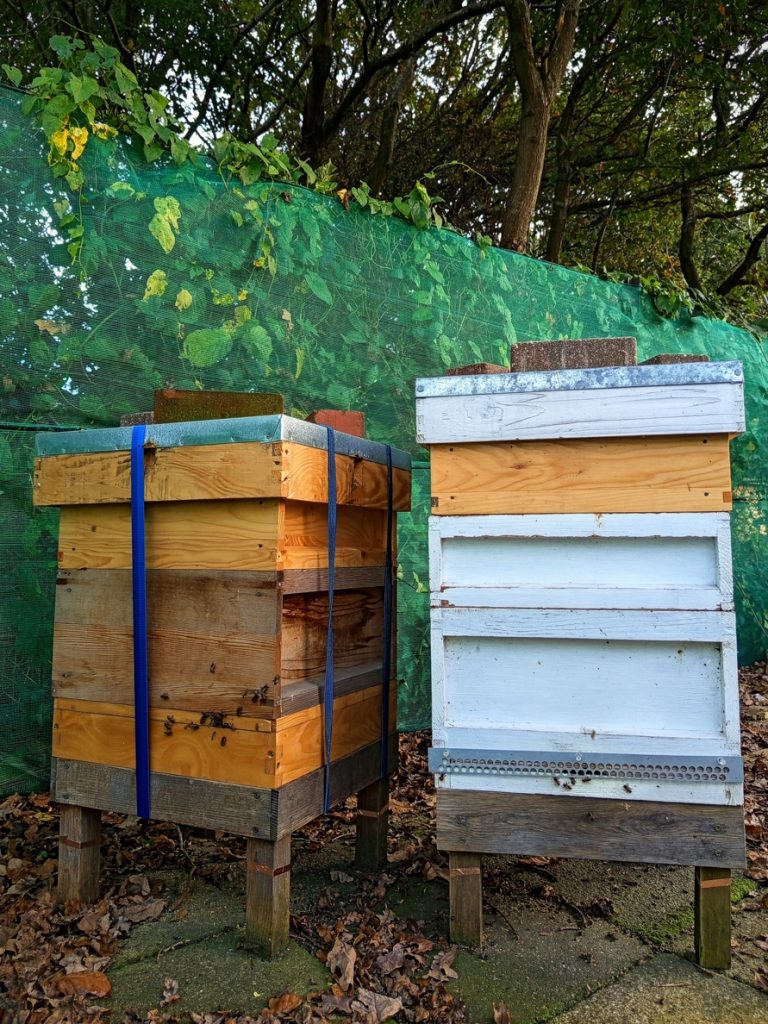
All my hives and tools are made from wood or metal – mostly second-hand equipment. I only use plastic when there is no effective alternative (for example, the feeders used briefly each year).
Forage support and biodiversity
– I plant pollinator-friendly flowers, shrubs, and trees wherever I can: around the apiary, on my allotment, and around our apartment building.
– I focus on planting species that bloom early in spring and late into autumn, helping fill gaps in the natural flowering calendar when nectar and pollen are scarce. I also grow a variety of plants to support different insects and create diverse nectar sources, which contribute to the character and flavour of the honey. I like to think that pollinators, like us, appreciate variety.
– When harvesting herbs or flowers, I wait until the blooms are past their prime so pollinators can enjoy the nectar and pollen first.
No imported bees or plants
My bees are local “mongrel” bees, well adapted to the area. Imported bees can introduce diseases or parasites that threaten local colonies, while imported plants may carry pests or invasive species in their soil. Fellow beekeepers have found serious invasive insects, including Yellow-Legged Hornet queens, hidden in imported plant stock.
Sharing the honey with the bees
Bees often gather more honey than they need for winter. I take only the surplus, plus a modest extra I call the “housing, security and healthcare tax,” and then feed sugar syrup to top up their stores. Many larger-scale beekeepers remove all harvestable honey and rely heavily on sugar syrup or fondant through winter. My mentors and I consider this less considerate, as honey naturally contains micronutrients that sugar syrup lacks. While research hasn’t conclusively shown honey leads to better overwintering outcomes, many ethical small-scale beekeepers prefer to leave more honey with the bees as a precautionary choice, prioritising bee wellbeing over maximising yield.
No wing-clipping for the queen bee
Some beekeepers clip the queen’s wings to prevent swarming, but I prefer natural swarm-management methods such as giving the colony more space or splitting large colonies.
No Pollen Harvesting
I don’t harvest pollen from my hives. Pollen is an essential food source for the colony, particularly for feeding larvae and supporting healthy brood development. While pollen can be collected using traps, removing it means bees have to work harder to replace a resource they need for their own wellbeing.
Parasite and disease management
I use only non-synthetic treatments when essential (formic and oxalic acid) and am exploring non-chemical methods, although these are currently less effective.
Minimal use of smoke
I use as little smoke as possible to reduce stress on the bees and avoid affecting the honey’s flavour – studies have shown that smoke can alter honey’s volatile compounds.
Promoting sustainable practices
As part of Weybridge Beekeepers – and independently – I get involved in educating the local community about beekeeping, raising awareness of threats to pollinators, and inspiring people to reduce waste and plant more pollinator-friendly species. I also encourage fellow hobbyist gardeners to avoid synthetic insecticides, or at least use them in ways less harmful to beneficial insects.
Sustainable packaging
All my packaging is reusable, compostable or recyclable, with simple, minimalistic labels. Once I use up my stock of plastic honeycomb boxes, I’ll be switching to glass jars for honeycomb as well.
If you don’t make jams or preserves at home, I’m happy to take glass jars back and reuse them after proper sterilisation.
Free Green Local Delivery
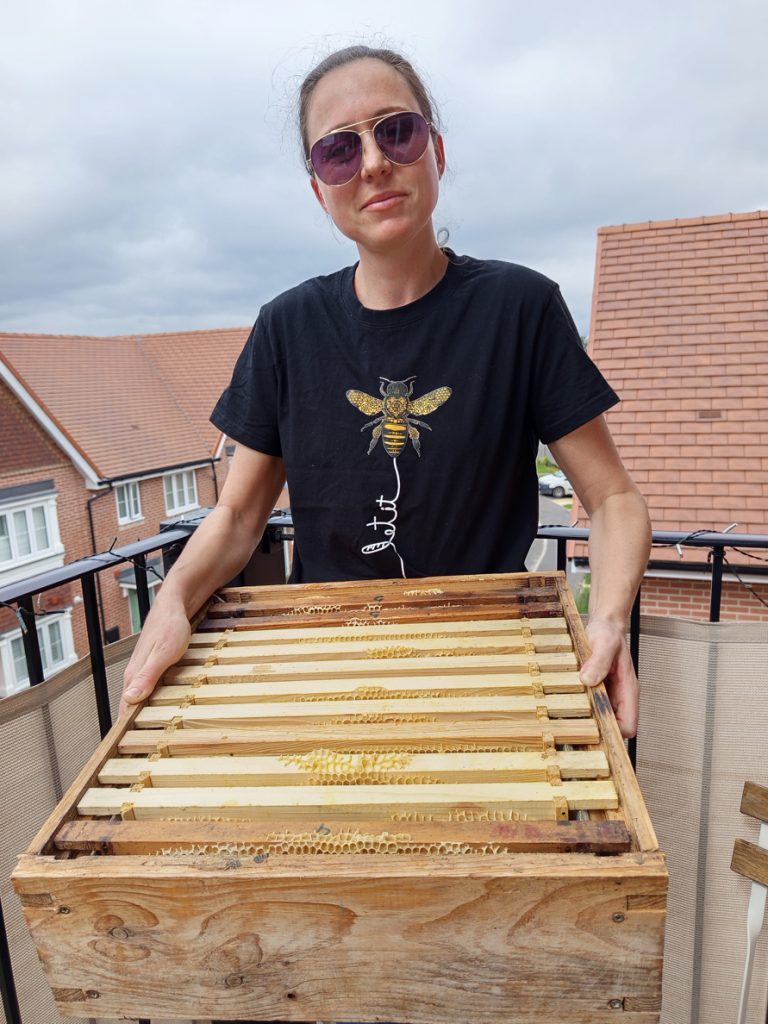
I offer free delivery – on foot or by bicycle – within Walton-on-Thames, Hersham, Weybridge, and Molesey, helping reduce unnecessary car journeys.
FAQs
How often do you get honey?
If spring is warm and abundant, I may take a small number of frames for cut comb as early as May. Runny honey is harvested once, in late summer. After that, honey harvesting stops for the season, although hive inspections and necessary welfare-related activities continue year-round. The bees are not disturbed for production again until the following season.
Why does honey vary in colour and flavour?
Honey reflects the flowers available to the bees at the time it was made. Weather, season, and forage diversity all influence colour, aroma, and taste, which means each harvest is slightly different – even from the same hives.
Does honey expire or go bad?
Honey doesn’t spoil in the way most foods do. Its low moisture content (around 18%) and natural acidity make it very stable, and properly stored honey can last for many years. In the UK, producers are required to include a best before date on labels (often around two years), but this reflects a legal labelling requirement rather than a safety cut-off.
Over time, honey may crystallise – this is a natural process and a sign that the honey is raw and minimally processed. Crystallised honey is perfectly good to eat and has not spoiled.
My honey has crystallised – what can I do?
To return it to a runny state, place the jar in a bowl of warm (but not hot) water, ideally around 40–45°C, and gently stir occasionally. Avoid microwaving or overheating, as high temperatures can damage the honey’s natural enzymes and flavour.
Crystallisation may happen again over time – this is completely normal.
Do you heat or filter your honey?
My honey is gently strained to remove wax fragments and natural debris, but it isn’t ultra-filtered. Occasionally, jars are gently warmed at low temperatures to deal with crystallisation, using the same method recommended to customers. High heat is avoided to preserve flavour and natural properties.
Do you always wear a bee suit, and do you get stung often?
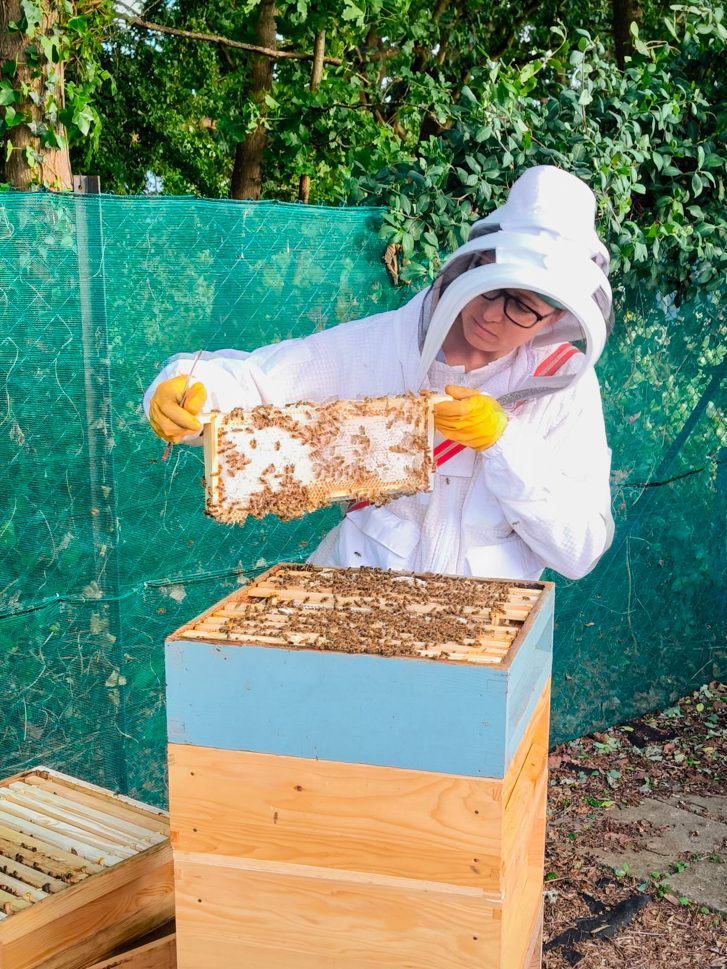
Yes, I always wear a bee suit when working with my hives.
I’ve been stung occasionally, usually in those moments when I wasn’t wearing full protection and assumed it was too cold for the bees to be active, or that I’d “just be a minute” near the hives. Bees don’t always read the rulebook.
I also tend to have strong topical reactions to stings, and since it’s possible to develop a serious allergy at any point, I don’t take chances. Wearing a suit keeps me safe, helps me stay calm, and makes for gentler beekeeping altogether.
Why is cut comb more expensive than runny honey?
Cut comb honey requires the bees to build fresh wax comb from scratch every season, rather than reusing existing comb.
Producing new wax is energy-intensive for the bees, which means less total honey is produced overall. It’s also more labour-intensive to harvest carefully without damaging the comb.
For these reasons, cut comb is naturally more expensive than extracted runny honey, and many beekeepers choose not to produce cut comb at all.
There’s a swarm in my garden / chimney / shed – what should I do?
Stay calm – swarming bees are usually not aggressive. A swarm is simply a colony, or part of a colony, looking for a new home.
The best thing to do is to contact a local beekeeper or swarm collector, who can safely remove and rehome them. You can use BBKA’s swarm collector map to find the nearest volunteer in your area.
What can I do to help pollinators?
Small changes really do make a difference. You could:
– Grow wildflowers, even in pots, or replace part of a lawn with wildflowers or clover
– Choose pollinator-friendly plants that flower early in spring or late into autumn, or a wide variety of flowers to support different pollinators (see these RHS planting ideas )
– Plant flowering trees or shrubs if you have the space
– Avoid synthetic insecticides, especially during flowering. If you must use these, apply in the evening when pollinators are less active
– Keep an eye out for Asian Hornet sightings and report them promptly via the National Bee Unit
Is honey suitable for children and pets?
Honey is suitable for children over one year old but should not be given to infants under 12 months. Some people choose to give small amounts of honey to pets such as dogs, but this should always be done in moderation and with awareness of individual dietary needs. Honey should never replace appropriate veterinary care or balanced nutrition.
Why does local honey sell out quickly?
Local honey is produced in small quantities and depends heavily on weather, forage availability, and the health of the colonies. Because bee wellbeing is prioritised over maximum yield, harvests are limited and seasonal.